Understanding energy, costs, and what works in practice
Clear, straightforward information for property owners and businesses looking at renewable power in the UK.
Clear, straightforward information for property owners and businesses looking at renewable power in the UK.
For many commercial and industrial sites, energy was once treated as a fixed overhead. That approach is becoming less workable. Costs have become more variable, and in some cases significantly higher, making energy use a more active management issue.
Electricity bills are not just based on how much energy is used. They can also reflect when it is used, how quickly it is drawn from the grid, and the capacity agreed with the network. This means that two sites using the same total energy can face very different costs.
Understanding how and when energy is used is often the starting point. Without that, it is difficult to identify where meaningful savings can be made.
Energy use varies widely between sectors, but certain patterns appear regularly. In industrial settings, machinery, compressed air systems, and process loads tend to dominate. In commercial buildings, heating, cooling, lighting, and IT systems are often the main contributors.
Some loads are continuous, while others are intermittent. Peaks in demand can occur when several systems operate at the same time, particularly at start-up or during busy periods. These peaks can have a disproportionate effect on costs.
Identifying the largest consumers and understanding their operating patterns helps to focus attention where it will have the greatest impact.
Improving efficiency is usually the most direct way to reduce energy use. This can involve upgrading equipment, improving insulation, or refining how systems are controlled.
Lighting is often an early area to address. Modern LED systems use significantly less energy than older fittings and can be combined with controls such as occupancy sensors or daylight adjustment.
Heating and cooling systems also offer opportunities. Better controls, zoning, and regular maintenance can reduce unnecessary consumption. In industrial environments, attention to motors, drives, and compressed air systems can lead to noticeable reductions.
These measures tend to provide steady, predictable savings because they reduce the underlying demand rather than shifting it.
In many cases, it is not just how much energy is used, but when it is used that affects cost. Time-of-use tariffs and demand-related charges mean that electricity can be more expensive at certain times of day.
Load shifting involves moving energy-intensive activities to lower-cost periods where possible. This might include running certain processes overnight or staggering equipment start times to avoid sharp peaks.
Even small adjustments can reduce maximum demand, which may help to avoid higher capacity charges or the need for supply upgrades. The effectiveness of this approach depends on how flexible the site’s operations are.
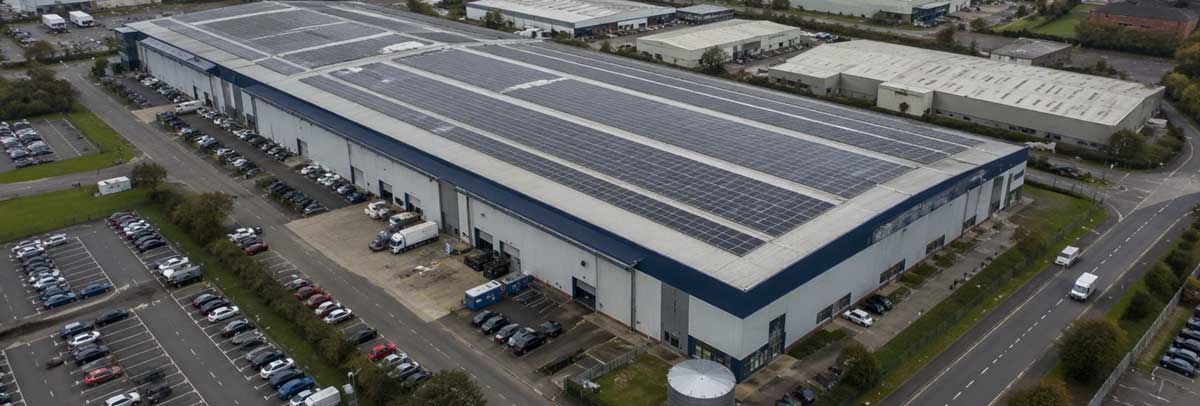
Some sites look beyond efficiency and scheduling to reduce reliance on the grid. On-site generation, such as solar power, can offset daytime electricity use, while battery storage can help manage peaks and short-term fluctuations.
These technologies do not reduce overall demand in the same way as efficiency improvements, but they can reduce the amount of energy imported at higher cost periods. In certain situations, they can also help sites remain within existing supply limits.
The value of these systems depends heavily on how they are integrated with the site’s energy profile. Poor alignment between generation, storage, and demand can limit their effectiveness.
Energy costs are influenced by several factors. Total consumption is one part, but tariffs, demand charges, and contractual arrangements all play a role. Some sites also face penalties or higher charges if agreed limits are exceeded.
Standing charges and capacity agreements can form a significant part of the bill, particularly for larger connections. This means that reducing peak demand can sometimes have as much impact as reducing total usage.
It is also worth noting that future costs are uncertain. Changes in energy markets, policy, and network constraints can all affect pricing. This uncertainty is one reason many sites look for ways to gain more control over their energy use.
There is rarely a single measure that delivers all the savings. Most effective strategies combine several approaches, including efficiency improvements, better control of demand, and selective use of technology.
The right balance depends on the nature of the site. A warehouse with stable lighting loads may focus on efficiency, while a factory with variable processes may benefit more from demand management.
In practice, the aim is not just to reduce energy use, but to make it more predictable and manageable. Sites that understand their energy profile and respond to it tend to be better placed to control costs over time.